
Accounting Platform • Product Strategy • UX Architecture • Workflow Design
Scaling accounting operations through a structured financial foundation
As the platform expanded its accounting capabilities, finance teams needed a reliable and auditable foundation that could support future growth without increasing operational risk.
- ✓Eliminated spreadsheet-dependent setup processes
- ✓Established audit-ready controls
- ✓Created a scalable accounting foundation for future modules
- ✓Reduced reporting and reconciliation risk
B2B Accounting Platform
Manual opening balance setup created reporting risk and blocked future modules
Product Strategy · System Design · Workflow Architecture
Scalable, auditable accounting foundation for future growth
Outcome first
Business Outcomes
The engagement delivered a structured accounting foundation that reduces operational risk today and unlocks future platform modules without re-work.
Separated historical and operational transactions
A clear accounting boundary prevents opening balances from distorting operational reporting.
Introduced validation and approval controls before balances enter the ledger
Errors are caught at entry — not at month-end close or in audit.
Removed spreadsheet dependency from financial setup
Critical accounting data now lives inside the product, with clear ownership and traceability.
Established a scalable foundation for future accounting modules
New capabilities — multi-entity, consolidation, revaluation — build on the same controlled workflow.
The business problem
The Challenge
As the platform scaled, finance teams still relied on spreadsheets and manual controls to establish opening balances. This introduced reporting risk, slowed month-end close, and made audit preparation dependent on senior time.
Every new accounting module inherited the same fragile setup — limiting how quickly the product could safely expand.
"Without a structured opening balance workflow, every new accounting capability inherited the same operational risk."
Critical financial setup lived outside the product, in files no one owned.
Manual balances produced discrepancies that undermined trust in the numbers.
Errors surfaced late — at close, in audit, or in front of customers.
New accounting modules could not ship on top of an unreliable foundation.
Framing
Discovery & Product Definition
A focused discovery phase aligned finance, product, and engineering on the workflow, controls, and constraints — enough rigor to make confident decisions, without slowing delivery.
The core problem was not balance entry itself.
The real issue was the absence of a clear accounting boundary between historical balances and operational transactions.
Without that separation, every future accounting module would inherit the same reporting, reconciliation, and audit risks.
Workflow Analysis
Mapped accounting processes, dependencies, and failure points across finance operations.
Stakeholder Alignment
Aligned finance and product on outcomes, controls, and explicit non-goals.
System Constraints
Framed the technical and accounting boundaries the workflow had to respect.
Audit & Validation Requirements
Defined the control points required for reliable reporting and audit.
Product strategy
Key Product Decisions
Four decisions defined the workflow — each grounded in operational reality and business impact, not preference.
Separate Historical and Future Transactions
Opening balances describe a point in time, not activity. Mixing them with operational entries corrupts reporting and creates duplication risk.
- ✓Cleaner financial reporting
- ✓Lower audit risk
- ✓Reliable historical position from day one
Introduce Validation as a Dedicated Step
Preventing errors at entry is materially cheaper than detecting and correcting them at close or in audit.
- ✓Fewer downstream corrections
- ✓Faster month-end close
- ✓Lower audit exposure
Require Structured Review and Approval
Opening balances anchor every future report. They demand explicit financial control and traceability.
- ✓Audit-ready traceability
- ✓Segregation of duties preserved
- ✓Reduced operational errors
Design for Future Expansion
The workflow needed to support modules that did not yet exist — multi-entity, consolidation, revaluation.
- ✓New accounting modules ship faster
- ✓No re-engineering of the foundation
- ✓Lower long-term platform cost
System design
Defining the Solution
A structured workflow that separates historical balances from future accounting activity, with validation and approval built into the process.
Create Balance
Validation
Account Mapping
Review
Confirmation
A workflow designed for finance teams while preserving accounting integrity and auditability.
Validating the workflow
Exploring the Experience
Early concepts were used to validate workflow structure, control points, and decision-making patterns before final implementation.
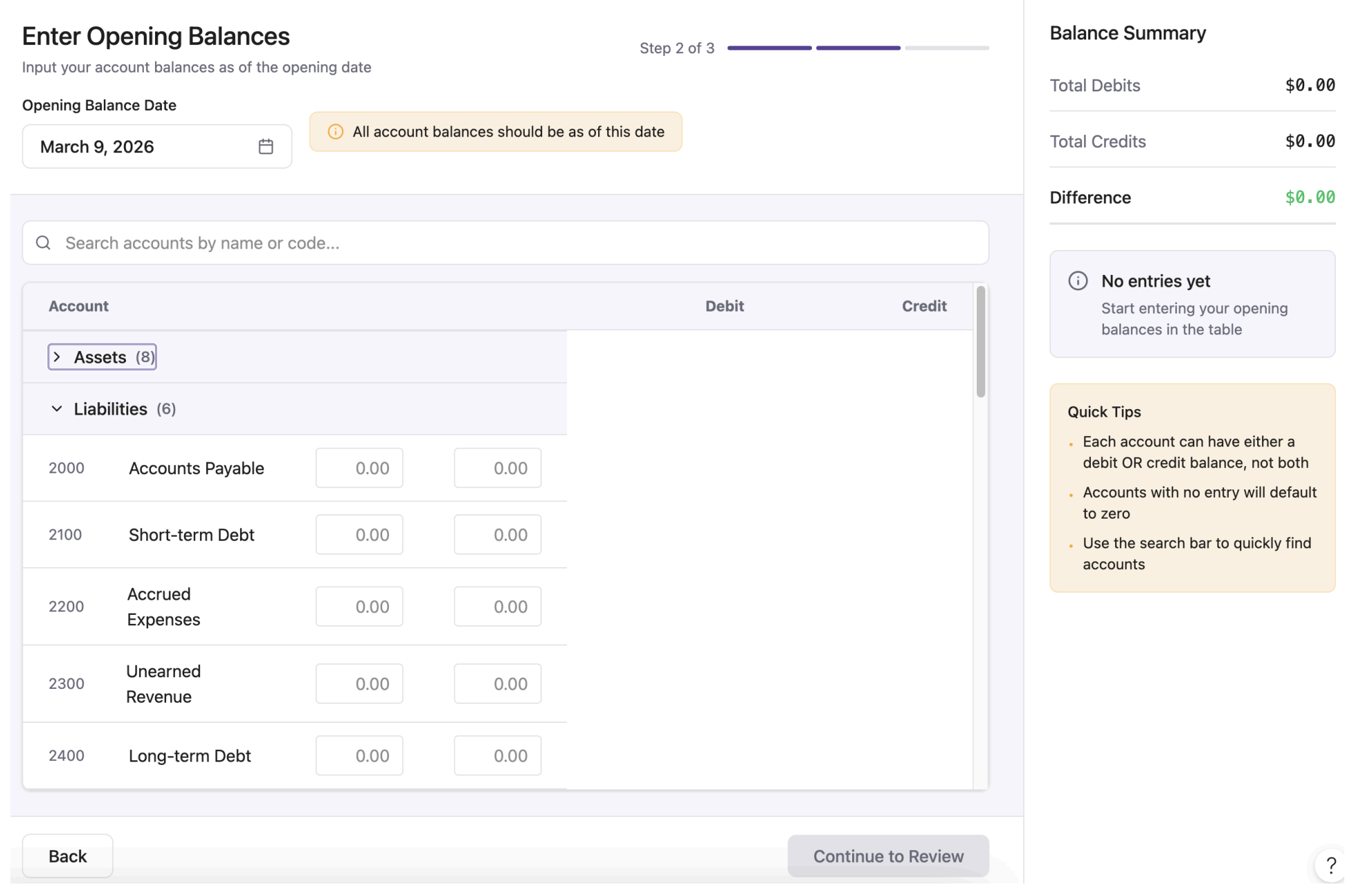
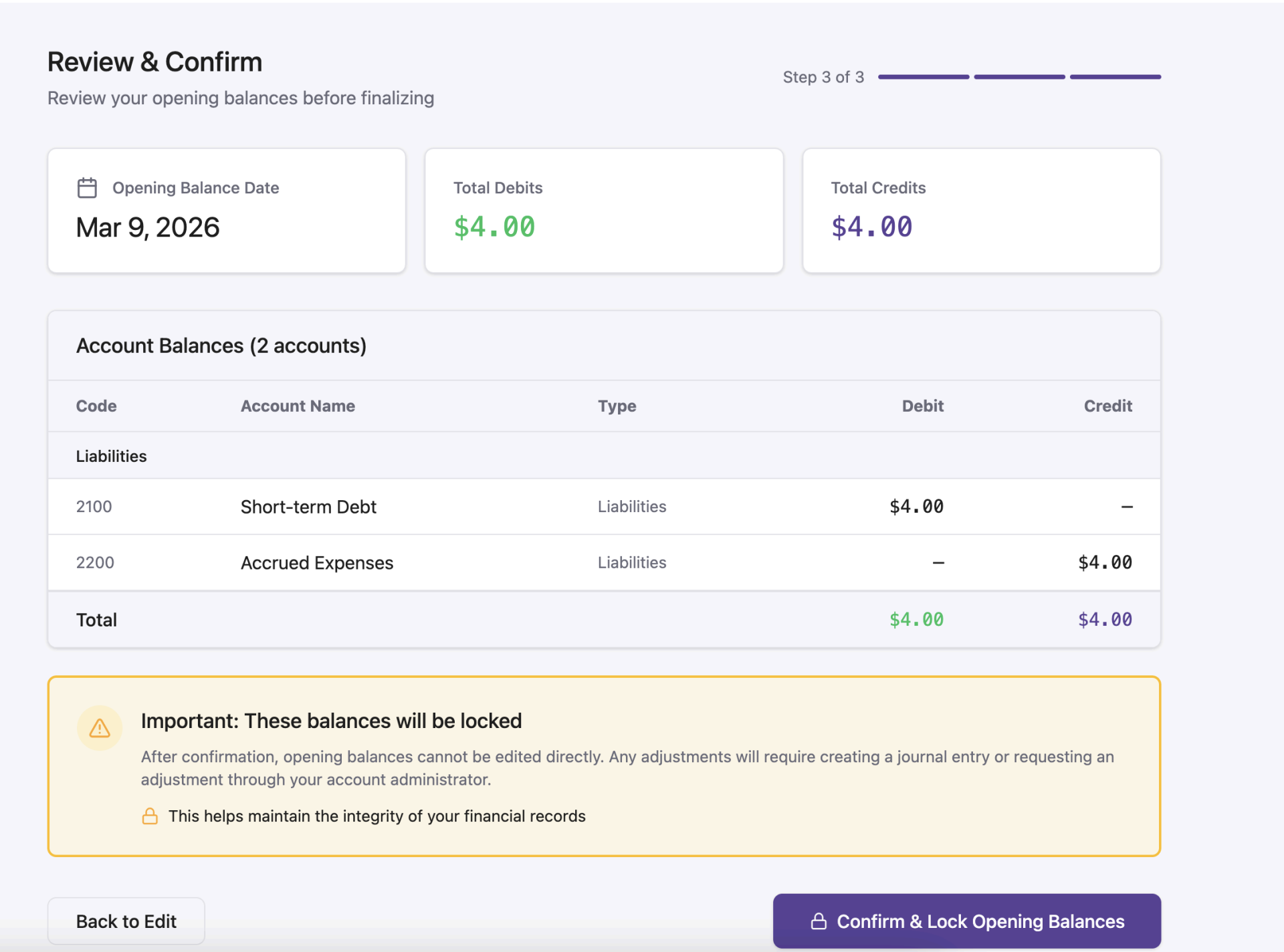
Selected wireframes used to pressure-test the workflow before committing to build.
In the product
Final Product Experience
The final experience guides finance teams through a controlled setup that protects data integrity from the first entry to audit.
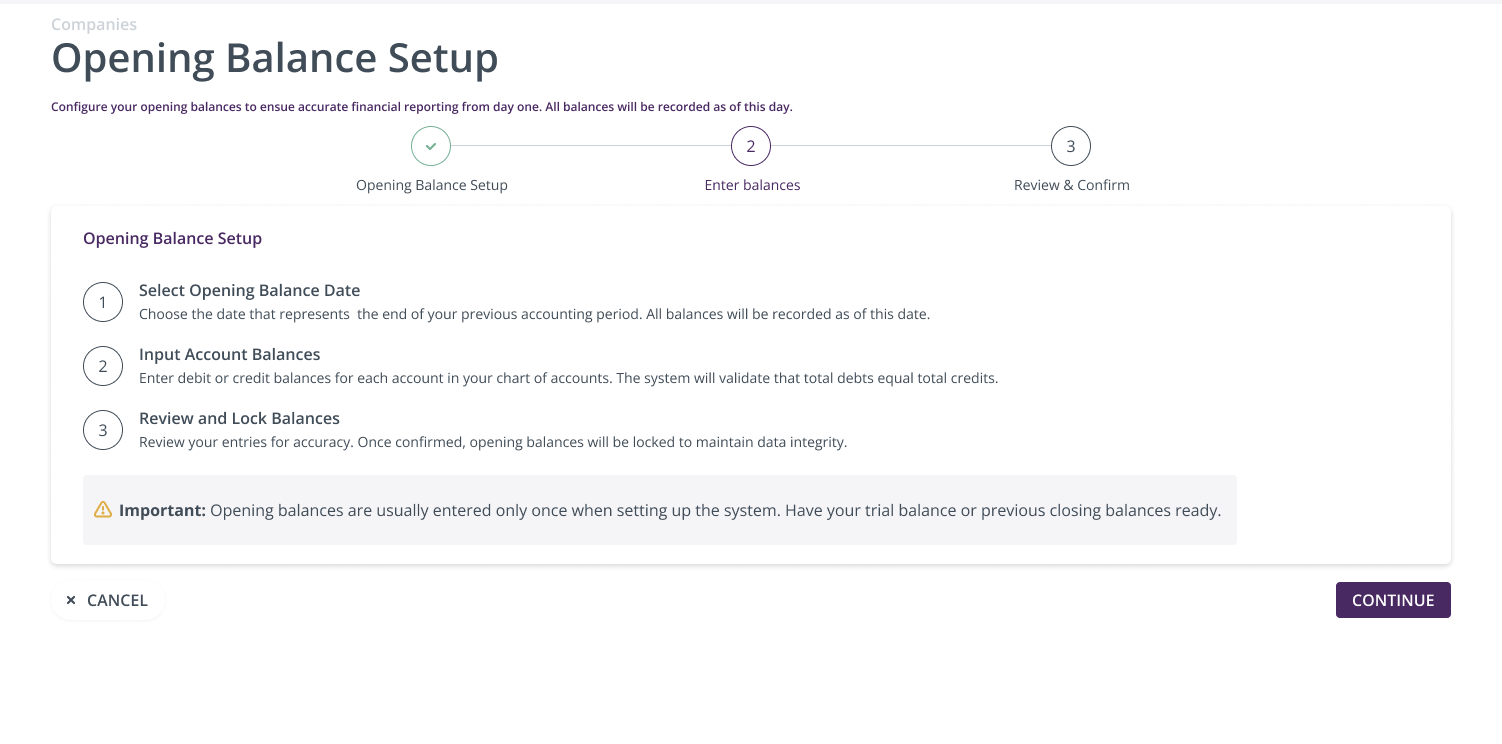
Opening Balance Setup
Creates a controlled accounting boundary that prevents historical data from affecting future reporting.
- ✓Locks the accounting start date before any activity
- ✓Prevents duplication between historical and operational entries
- ✓Establishes a defensible baseline for future reports
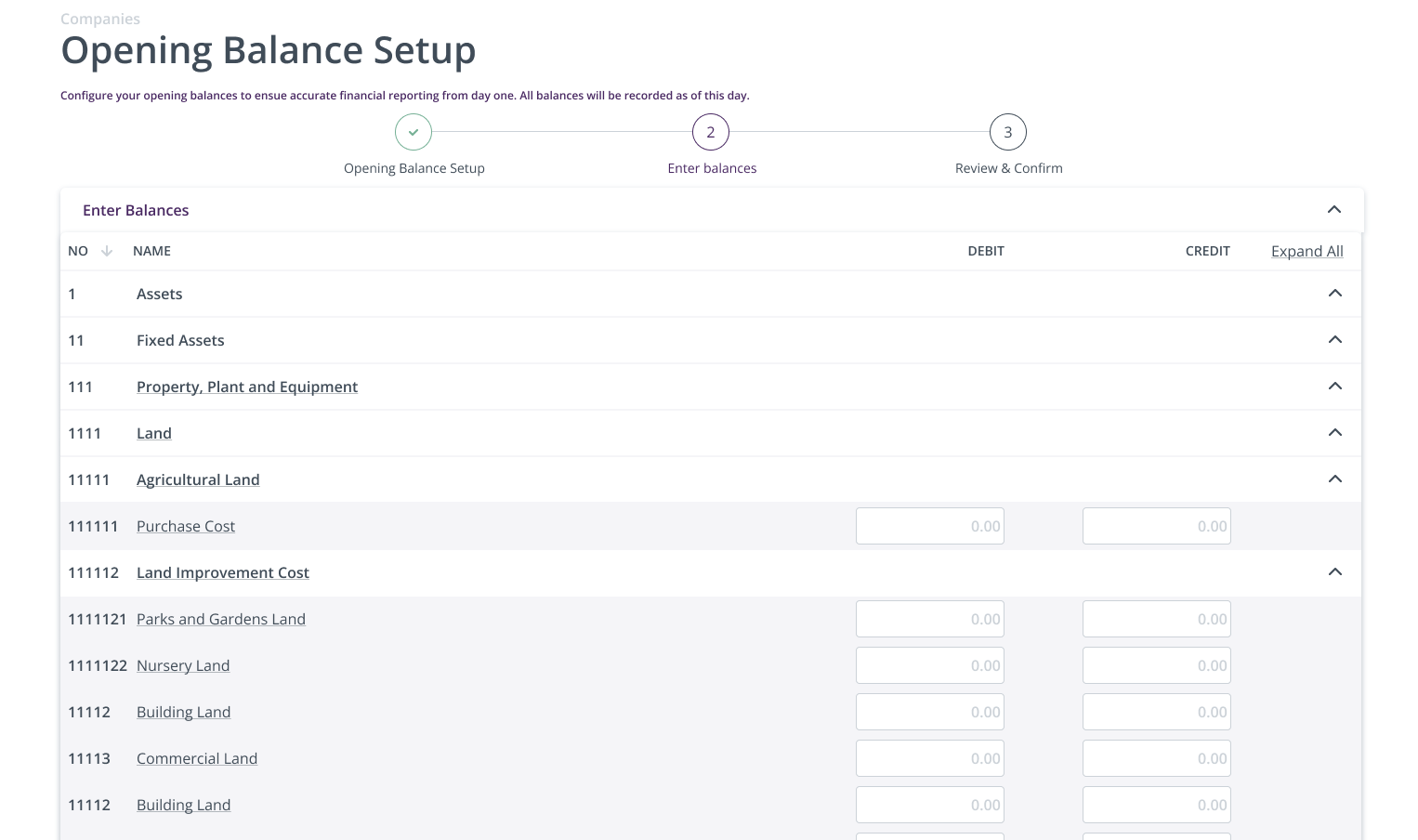
Account Mapping
Ensures accounting consistency from day one and reduces reconciliation effort as transaction volume grows.
- ✓Aligns opening balances with the chart of accounts
- ✓Surfaces inconsistencies before they reach the ledger
- ✓Reduces reconciliation cost as the business scales
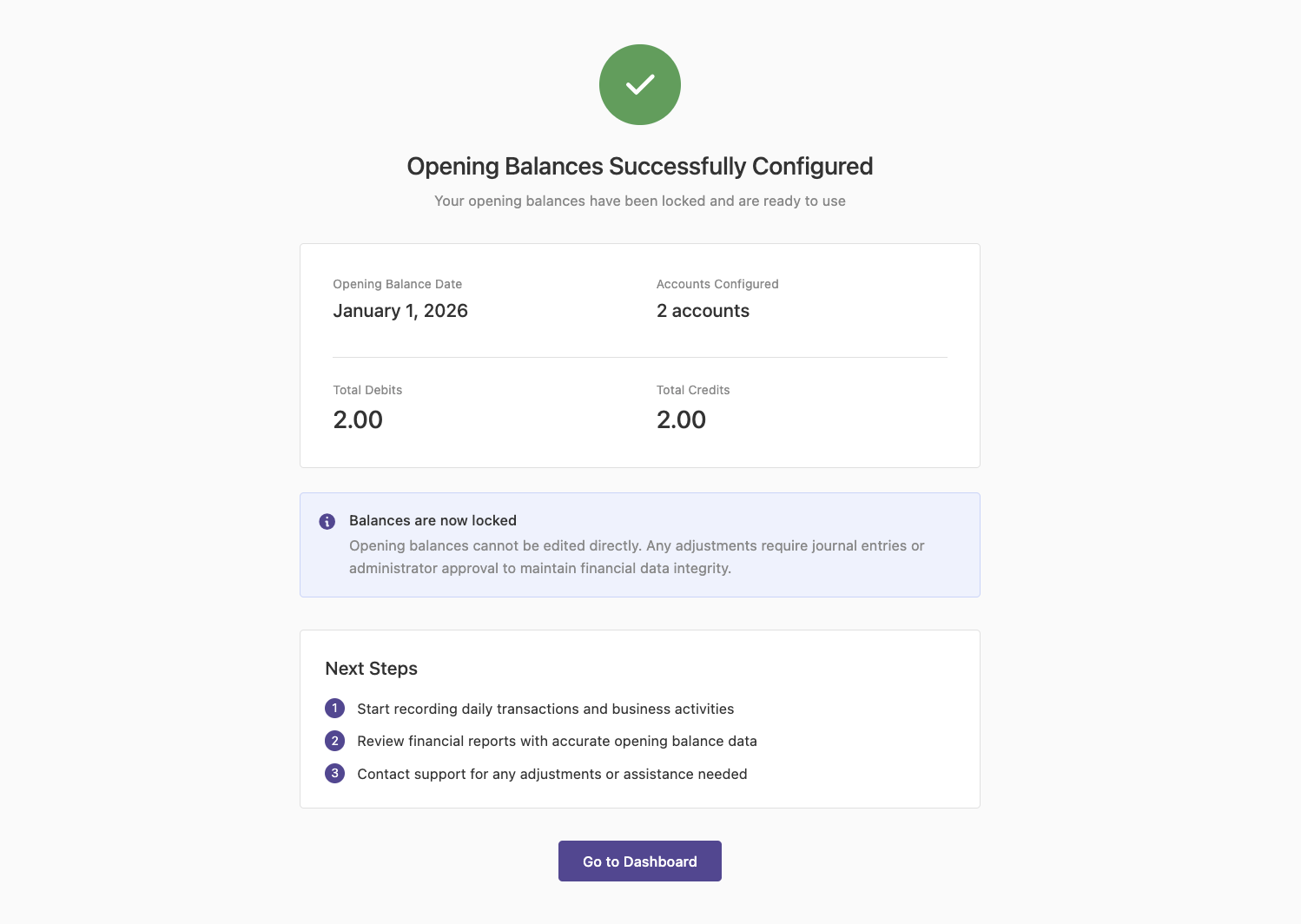
Review & Confirmation
Introduces audit-ready controls that reduce financial risk and improve accountability.
- ✓Explicit approval step with a traceable audit trail
- ✓Supports segregation of duties without added friction
- ✓Prevents accidental submission of incomplete balances
Role & ownership
Our Contribution
End-to-end product leadership — from discovery and strategy through workflow definition and delivery support.
Business outcomes
What Changed
The centralized workflow turned opening balances from an operational risk into a controlled, auditable process — and unlocked the roadmap for future financial modules.
Lessons & principles
Strategic Takeaways
Foundations Before Features
Systems scale more effectively when core workflows are defined before new functionality is added.
Validation Is Cheaper Than Correction
Preventing errors at entry is less costly than fixing them during reporting and audits.
Product Decisions Shape Operational Reality
Workflow design directly influences efficiency, trust, and scalability.
Scalability Starts with Structure
Future growth depends on establishing reliable operational foundations early.
Facing workflow complexity that slows growth?
Most SaaS product challenges originate in workflows, operational constraints, and business processes — not interface design alone.
We help startups identify structural product issues before they become expensive development, reporting, or operational problems.
No long-term commitments. No generic frameworks. Just clear direction.