
Accounting Platform • Product Strategy • Workflow Architecture • Compliance UX
Designing controlled journal entries without compromising ledger integrity
Most transactions were generated automatically, protecting consistency and ledger integrity. The platform still needed a safe way to handle the exceptional corrections that standard documents could not support — without turning manual posting into an uncontrolled shortcut.
- ✓Kept exceptional accounting adjustments inside the product
- ✓Embedded legal evidence and approval into sensitive workflows
- ✓Protected customer sub-ledgers with preventive controls
- ✓Created traceability from business reason to posted entry
B2B accounting platform serving regulated finance teams
Enable exceptional postings without weakening ledger controls or auditability
Product Strategy · Accounting Workflow Architecture · UX Definition
A controlled, evidence-led workflow for legally sensitive journal entries
Outcome first
Business Outcomes
The work reframed free journal entries from a generic accounting form into a governed exception capability — flexible where finance needs judgement, restrictive where the ledger requires protection.
Preserved ledger integrity
Protected header accounts, customer balances, and sector routing from invalid manual postings.
Made sensitive corrections audit-ready
Reason, evidence, approval, user, and posting history remain connected in one traceable record.
Reduced compliance exposure
Legal write-offs and similar scenarios cannot proceed until their required conditions and documentation are satisfied.
Standardised exceptional work
Six high-risk scenarios moved from individual judgement to guided, repeatable workflows.
The business problem
The Challenge
The platform correctly generated most journal entries from standard business documents. But tax withholding, legal debt write-offs, provision reversals, recoveries, and sector transfers did not fit those automated paths.
A completely open journal form would solve the flexibility gap while creating a larger control problem: users could bypass sub-ledger rules, post to restricted accounts, or remove assets without the legal evidence required for audit.
The challenge was therefore not to make manual posting easier. It was to support legitimate exceptions while preserving the accounting rules that automation normally enforces.
"Manual entries should not become routine postings; they are controlled exceptions with legal and audit consequences."
Six legitimate accounting cases could not be completed through standard documents.
A final debt write-off requires an authorised decree and mandatory supporting evidence.
Header accounts, negative customer balances, and sector routing require preventive controls.
A correction without reason, evidence, and ownership cannot be defended later.
Framing
Discovery & Product Definition
Discovery connected each accounting scenario to its system behaviour, evidence requirement, control points, and user-facing consequence. This prevented one generic form from masking materially different risks.
The product did not need unrestricted manual posting.
It needed a controlled exception layer that recognises the business reason first, then applies the correct accounts, evidence, validation, and approval rules.
The safest experience reduces choice where policy is known and preserves judgement only where an accountant genuinely needs it.
Scenario Analysis
Defined six exception paths: withholding clearing, legal write-off, provision reversal, recovery, sector transfer, and reconciliation.
Accounting Rules
Mapped required debit and credit behaviour, sub-ledger constraints, and prohibited account combinations.
Evidence & Approval
Identified when attachments are mandatory and where a second level of authorisation is required.
Cross-Cutting Controls
Translated negative-balance, sector-lock, and restricted-account rules into preventive interface behaviour.
Product strategy
Key Product Decisions
The experience was defined by control decisions rather than interface preferences. Each decision removes a known route to financial or audit risk.
Start from a reason, not an empty form
The accounting scenario determines the valid accounts, supporting evidence, and downstream behaviour. Capturing it first lets the system guide the rest of the entry.
- ✓Consistent treatment of repeat scenarios
- ✓Stronger audit context
- ✓Less reliance on individual memory
Constrain accounts when policy is explicit
For withholding clearing and debt recovery, the required debit and credit treatment is known. Locking those accounts prevents flexibility from becoming misposting risk.
- ✓No posting to restricted header accounts
- ✓Correct sector and sub-ledger routing
- ✓Fewer correction entries
Make legal evidence part of completion
A final debt write-off is valid only after an authorised decree. The workflow therefore treats the attachment as a prerequisite, not optional documentation.
- ✓Write-offs cannot bypass legal conditions
- ✓Evidence stays attached to the decision
- ✓Approval status is visible before posting
Validate the post-entry position
A balanced journal can still create an invalid customer or sector balance. Previewing the resulting position catches business-rule failures before they reach the ledger.
- ✓Negative customer balances blocked
- ✓Before-and-after impact is visible
- ✓Fewer downstream reconciliations
System design
Defining the Solution
We designed a scenario-led workflow that combines structured entry, balanced debit and credit lines, supporting evidence, real-time controls, and a complete posting summary.
Select Reason
Build Entry
Attach Evidence
Validate Impact
Review & Post
A controlled path from business reason to a balanced, evidenced, and traceable journal entry.
Validating the workflow
Exploring the Experience
We tested how six exceptional accounting scenarios should move through one governed experience. Mapping each business reason against its required account treatment, evidence, approval, balance validation, and sector rules showed where the journey could be shared — and where it had to adapt before posting.
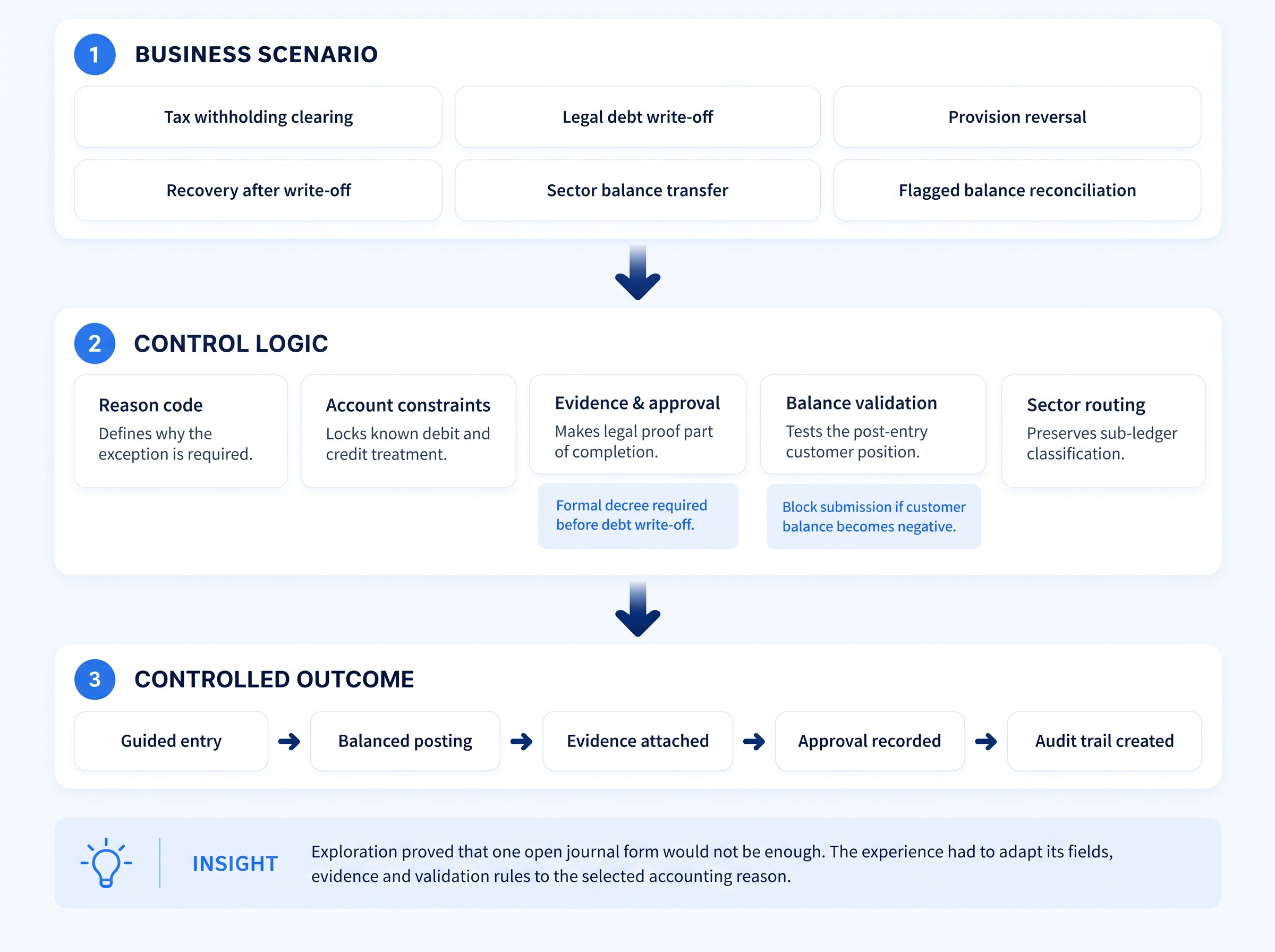
The exploration model aligned each exception with the controls needed to reach a balanced, evidenced, approved, and traceable posting.
In the product
Final Product Experience
The final product supports both focused adjustments and complex multi-entry work while keeping evidence, validation, totals, and the resulting ledger summary in view.
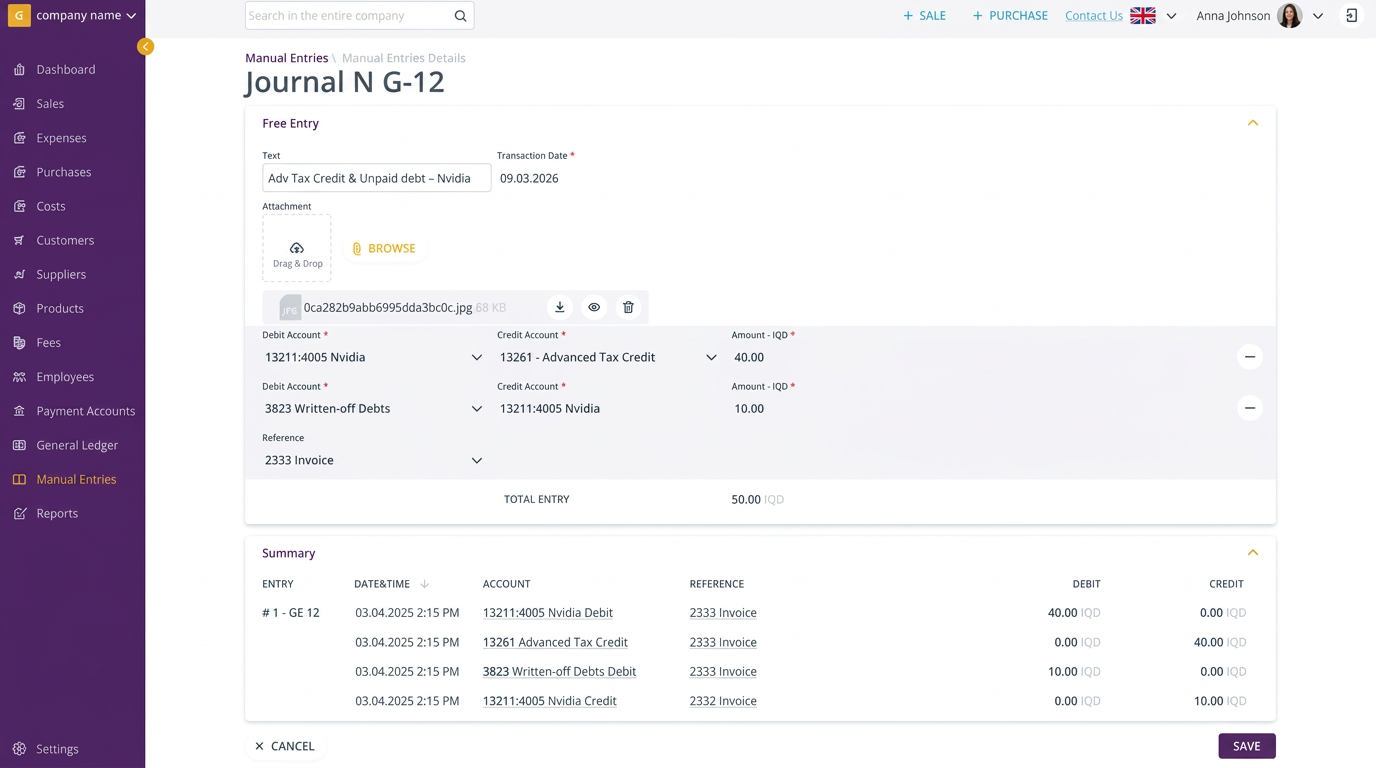
Reviewing a Completed Journal
A clear read-only state turns the posted journal into an audit record rather than another editable transaction screen.
- ✓Evidence remains available beside the entry
- ✓Debit and credit lines preserve account-level context
- ✓Summary connects every posting to date, reference, and amount
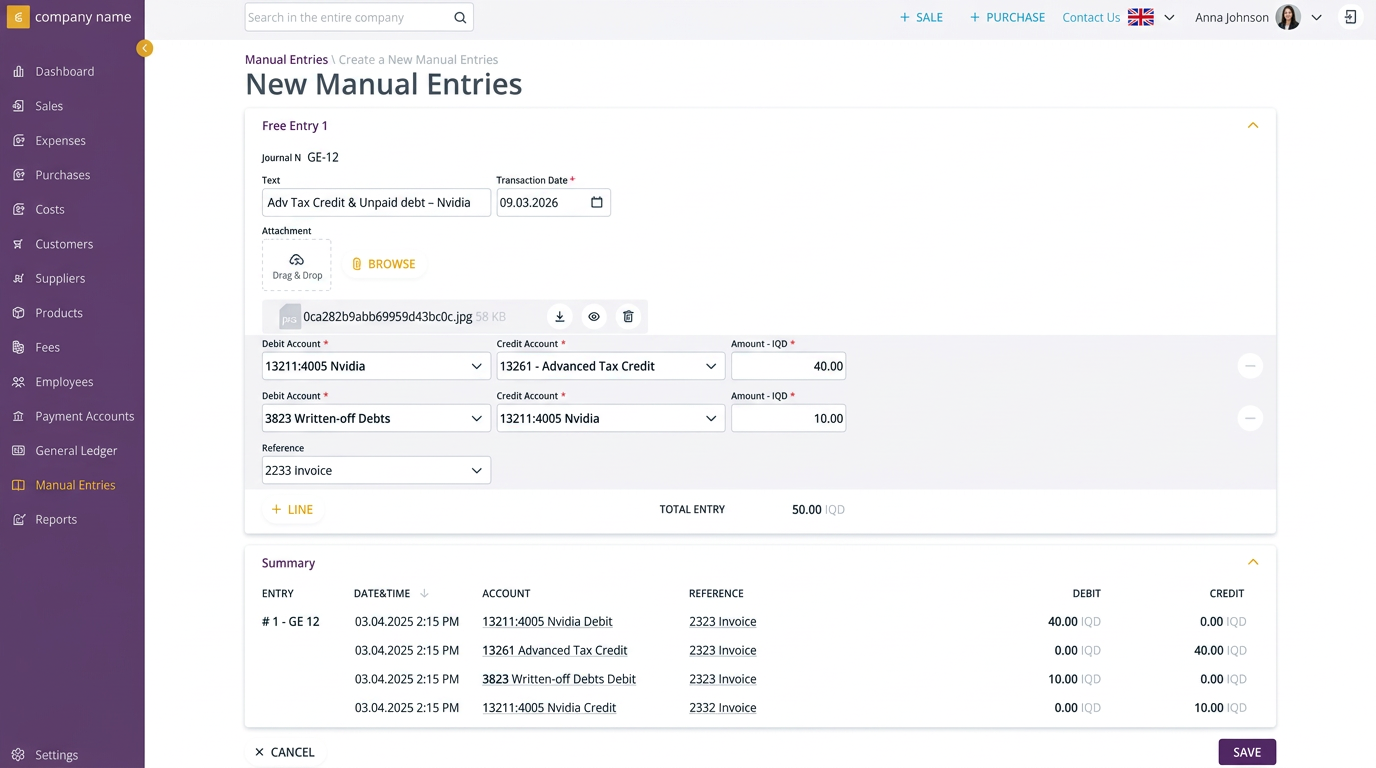
Creating a Controlled Adjustment
The creation flow keeps the accounting equation, source evidence, and downstream posting result visible before commitment.
- ✓Debit and credit relationships are explicit
- ✓Total entry validation is visible before save
- ✓Draft inputs and resulting summary can be checked together
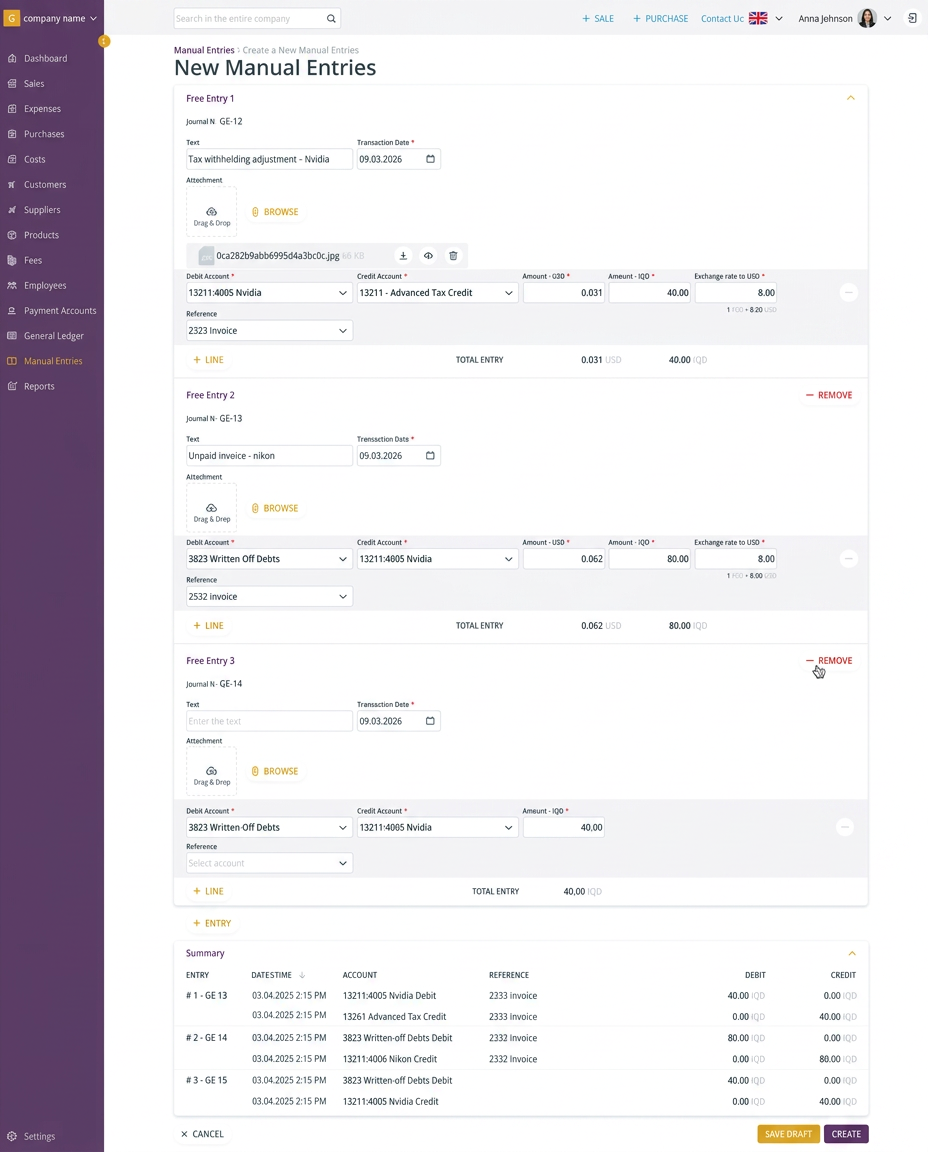
Managing Complex Multi-Entry Work
Multiple related adjustments can be prepared in one controlled workspace without losing the boundaries or totals of each journal.
- ✓Each journal retains its own reference and totals
- ✓Draft and create actions support review before posting
- ✓A consolidated summary improves final verification
Role & ownership
Our Contribution
End-to-end product leadership — from discovery and strategy through workflow definition and delivery support.
Business outcomes
What Changed
Free journal entries became a controlled accounting capability: flexible enough for legitimate exceptions, structured enough to protect the ledger, and traceable enough for audit.
Lessons & principles
Strategic Takeaways
Exceptions Need More Structure
The less frequently a workflow is used, the more guidance it needs; users cannot rely on routine or memory.
Compliance Must Shape the Flow
Legal prerequisites and supporting evidence belong in the workflow itself, not in training documents outside the product.
A Balanced Entry Can Still Be Wrong
Financial controls must validate business consequences — customer balances, sector routing, and account eligibility — not only debit and credit totals.
Reduce Choice Where Policy Is Known
Pre-filled and locked accounting treatment lowers risk without removing professional judgement where it is genuinely required.
Facing accounting complexity that slows product growth?
Financial workflows need more than usable screens. They need clear rules, controlled exceptions, and product decisions that stand up to operations and audit.
We help teams translate complex accounting requirements into workflows people can use and businesses can safely scale.
No long-term commitments. No generic frameworks. Just clear direction.