01
Observe real work
Operational evidence
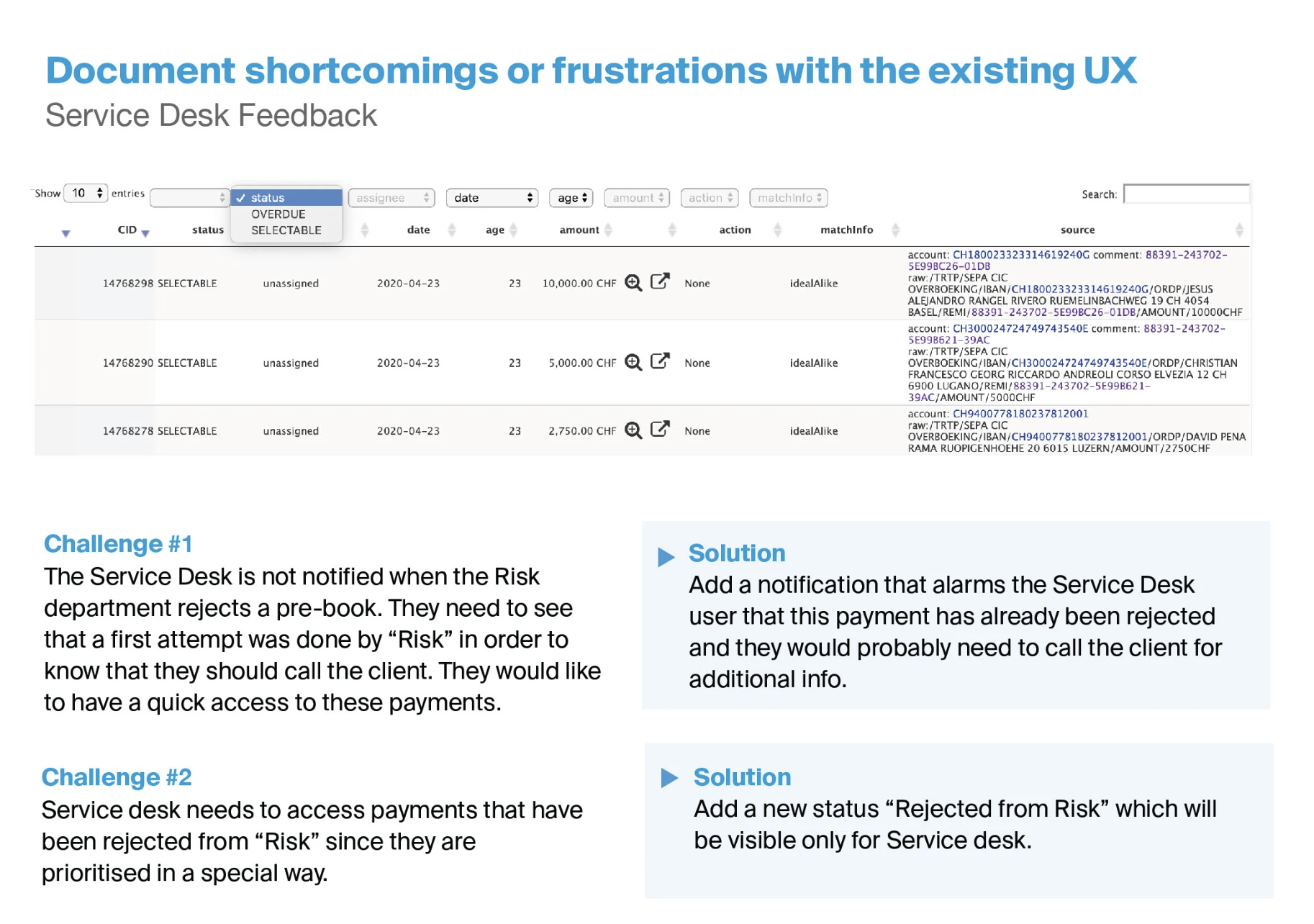
Service Desk workflows exposed hidden handoffs: Risk decisions were not consistently visible to the team responsible for the next action.

Investment Banking • UX Audit • Workflow Architecture • Prototype Design
An internal money-processing tool had evolved around technical constraints rather than the teams responsible for moving, reviewing, and approving funds. We audited the full operating model before refactoring the experience into a clearer low–mid fidelity prototype.
Internal money processing within investment banking
Fragmented workflows, unclear permissions, and hidden cross-team dependencies
UX audit · Product strategy · Workflow architecture · Prototype design
A role-aware refactoring concept grounded in operational reality
Outcome first
The work gave the organisation a structured basis for improving a business-critical system without separating interface decisions from operational risk, governance, or technical feasibility.
Reduced operational ambiguity
Responsibilities, statuses, and next actions became easier to understand across Service Desk, Risk, and Operations.
Strengthened control between teams
Approval dependencies were made explicit so one department’s decision could reliably trigger the next team’s work.
Focused refactoring investment
Observed user friction and business risk created a clear priority order instead of a broad visual redesign.
Improved readiness for scale
The proposed model supports increasing payment volume while reducing manual checking and avoidable coordination.
The business problem
The legacy tool supported a high-consequence process: identifying incoming payments, matching them to clients, reviewing risk, and routing exceptions between teams. Yet essential context was distributed across dense tables, separate panels, email, and individual knowledge.
Service Desk could not always see when Risk had rejected a payment. Risk users had to leave the main workflow to access client details or supporting evidence. Statuses, comments, logs, and actions did not consistently reflect the real relationship between departments.
The challenge was therefore not cosmetic. Refactoring had to improve productivity and clarity while preserving data dependencies, approval authority, and the technical behaviour of a live internal system.
"The interface could only improve once the operating model behind it — people, permissions, decisions, and handoffs — was made visible."
Several teams touched the same payment without one shared view of its status or next owner.
A Risk decision could alter Service Desk work without generating a clear notification or state change.
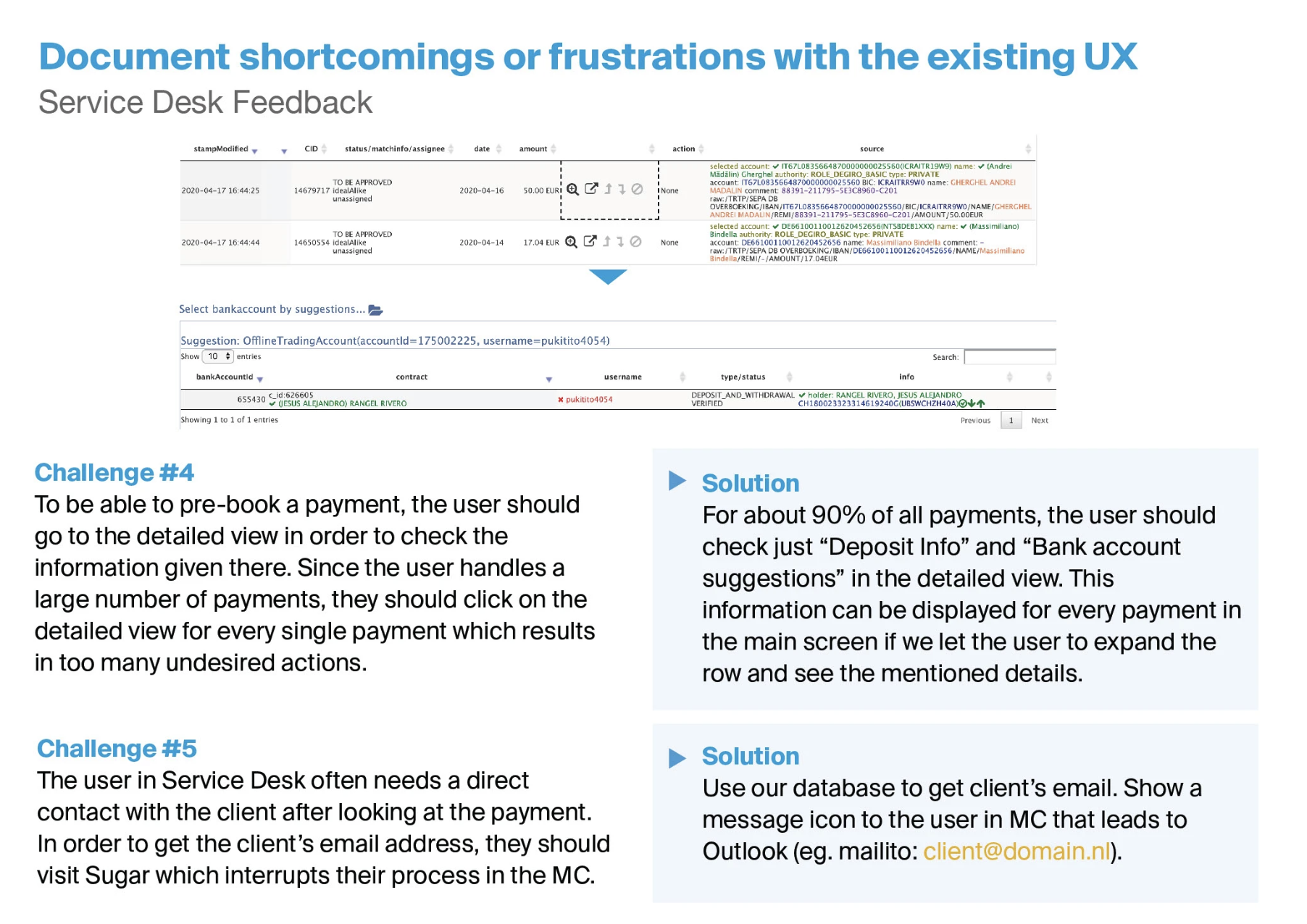
Client data, comments, logs, and evidence required extra navigation and repeated checking.
The experience had to improve without disrupting established processing logic and technical integrations.
Framing
The audit combined business objectives, stakeholder interviews, role and permission mapping, observed workflows, interface review, and accessibility analysis. This connected visible usability issues to the operational rules causing them.
Most friction came from coordination, not individual screens. Users needed the system to communicate what another team had decided, what evidence was available, and who could act next.
The refactoring therefore centred on workflow visibility and permission-aware actions rather than a surface-level visual refresh.
Defined Service Desk, Risk, Operations, client, and banking actors together with their responsibilities and information needs.
Mapped who could review, approve, reject, assign, refund, or escalate — including dependencies between departments.
Reviewed queues, payment detail views, handoffs, exception states, comments, logs, and supporting links with users.
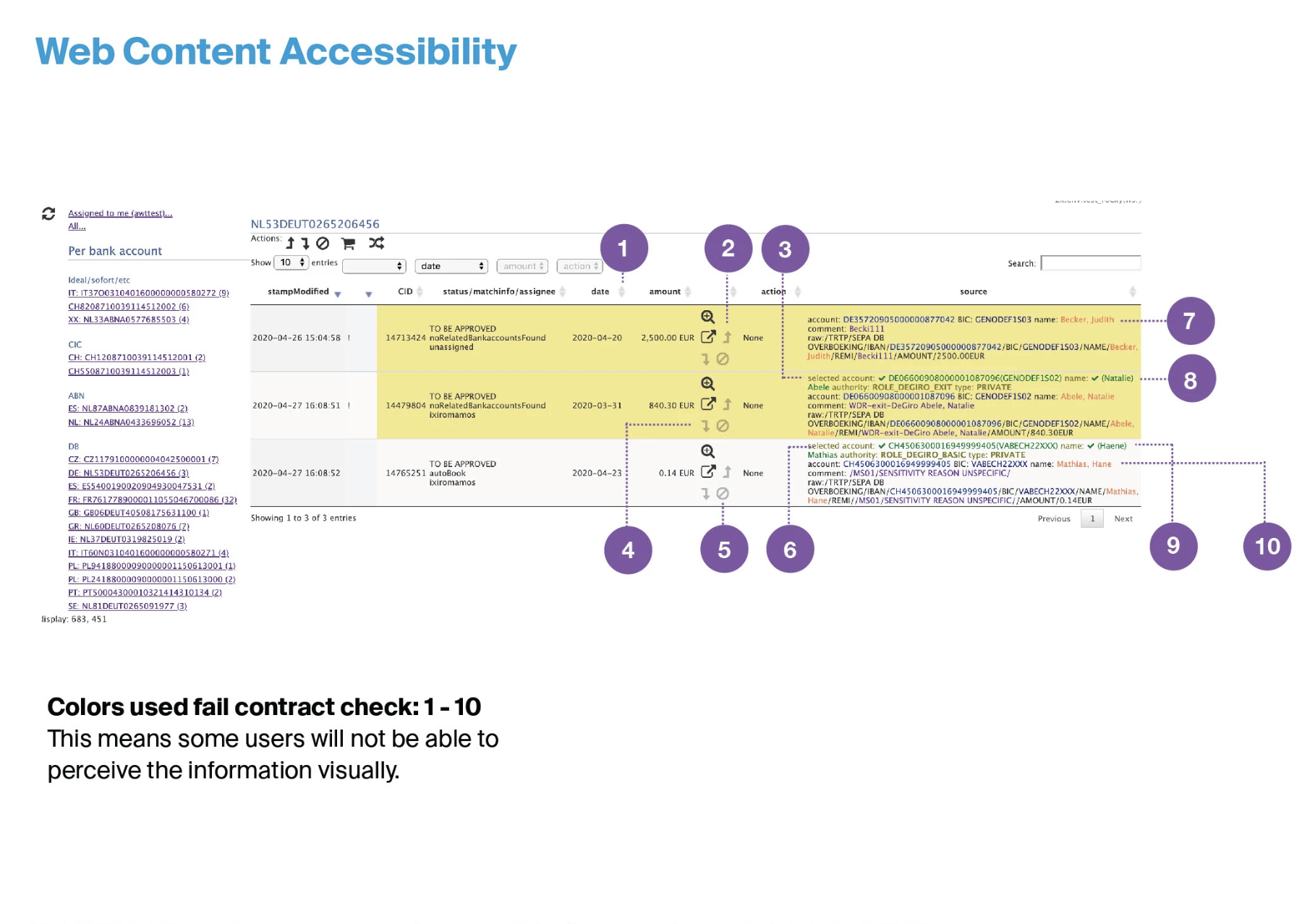
Documented legacy constraints, low-contrast status signals, unlabeled actions, and layout inconsistencies that affected safe use.
Product strategy
The proposed experience was organised around the decisions internal teams make, with each interface change tied to an operational or governance need.
Service Desk needed immediate confirmation when Risk rejected a payment rather than discovering it through manual checks.
Comments, logs, client links, and source information were part of the decision, not secondary reference material.
Approve, reject, refund, and operations handoff actions had to reflect each role’s authority and the payment’s current state.
The proposal needed to improve hierarchy and workflow without assuming that core processing logic or integrations could be replaced at once.
System design
We translated the audit into a role-aware money-processing journey that brings the right context, controls, and handoffs into each decision point.
A structured path from operational evidence to a feasible refactoring concept.
Validating the workflow
The audit connected real working practices with stakeholder needs, permissions, technical constraints, and accessibility findings — turning observed friction into a focused refactoring direction.
Operational evidence
Service Desk workflows exposed hidden handoffs: Risk decisions were not consistently visible to the team responsible for the next action.
Controls & accessibility
The audit showed where essential payment and client information could be surfaced directly in the working view, reducing repeated navigation and investigation time.
Inclusive operations
Contrast testing identified colour-only signals and low-visibility actions that could undermine safe, accurate work in a high-consequence financial process.
Strategic alignment
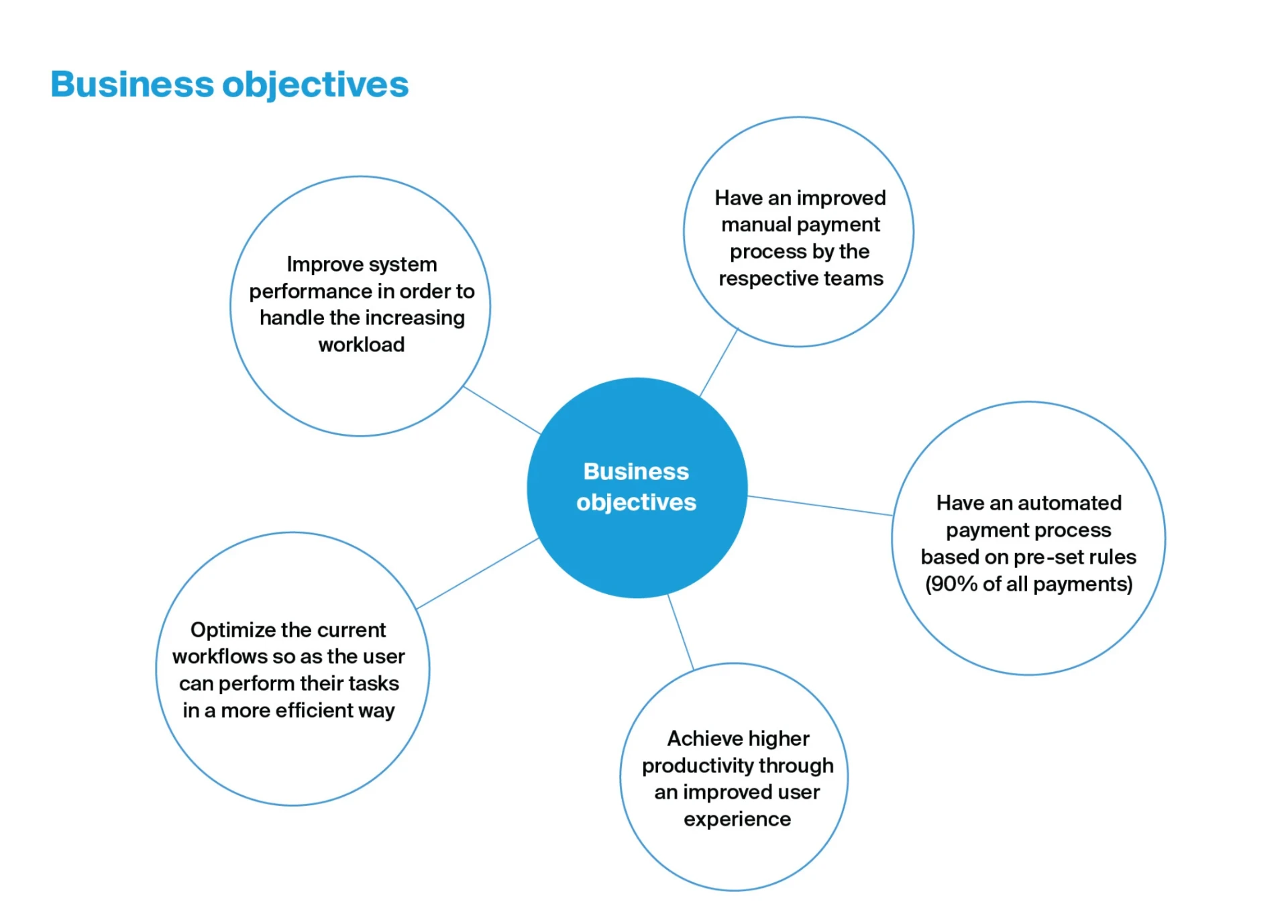
Business goals connected system performance, automation, productivity, and workflow efficiency to a focused refactoring direction.
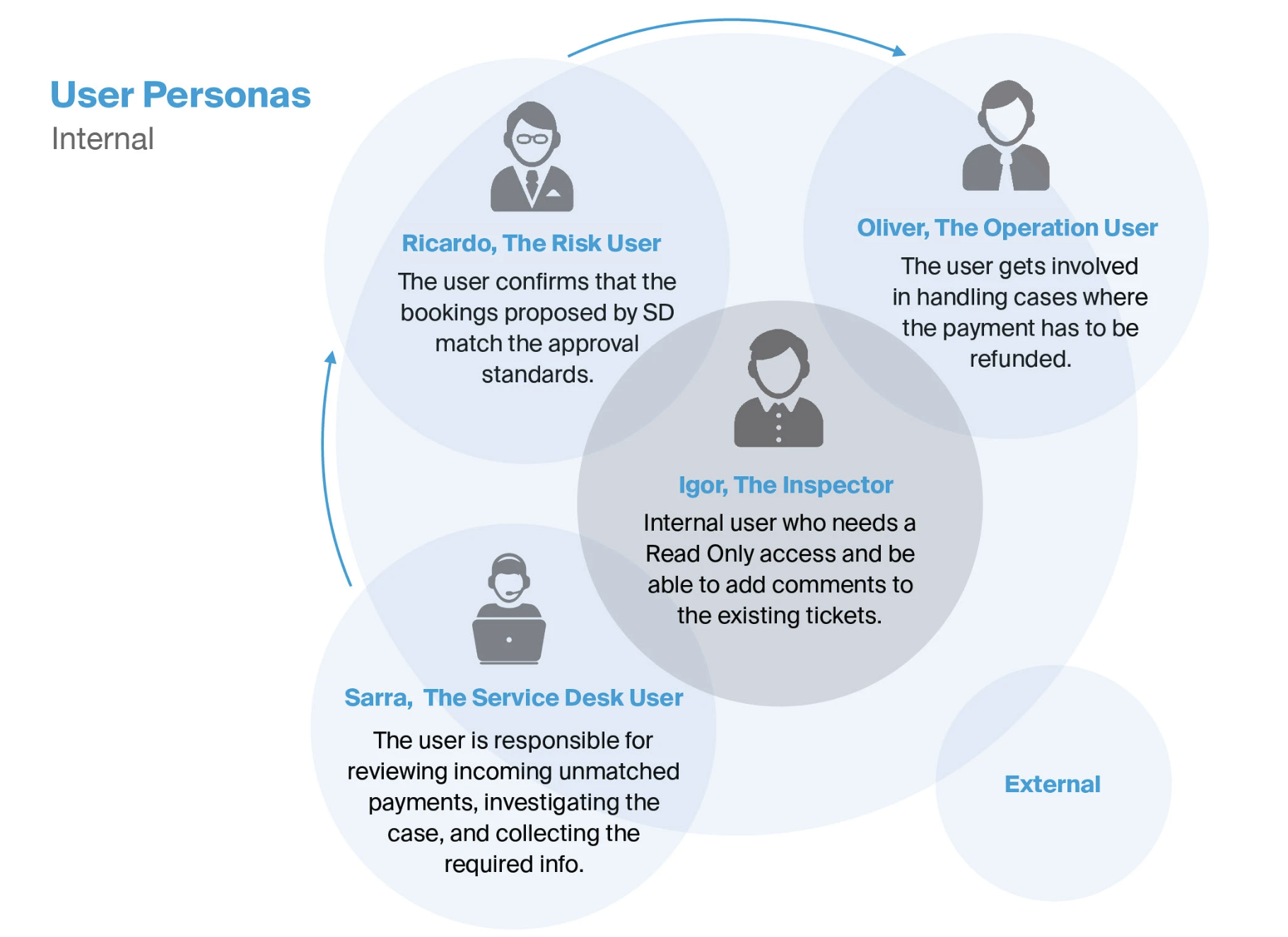
Stakeholder model
Role, payment state, and cross-team approval determined who could review, comment, approve, reject, or route each case.
Selected evidence linking operational friction with business objectives, stakeholder responsibilities, and control requirements.
In the product
The low–mid fidelity prototype shows how the audited system could evolve without losing the operational density internal teams need. The result improves hierarchy and access to context while retaining the underlying payment-processing logic.
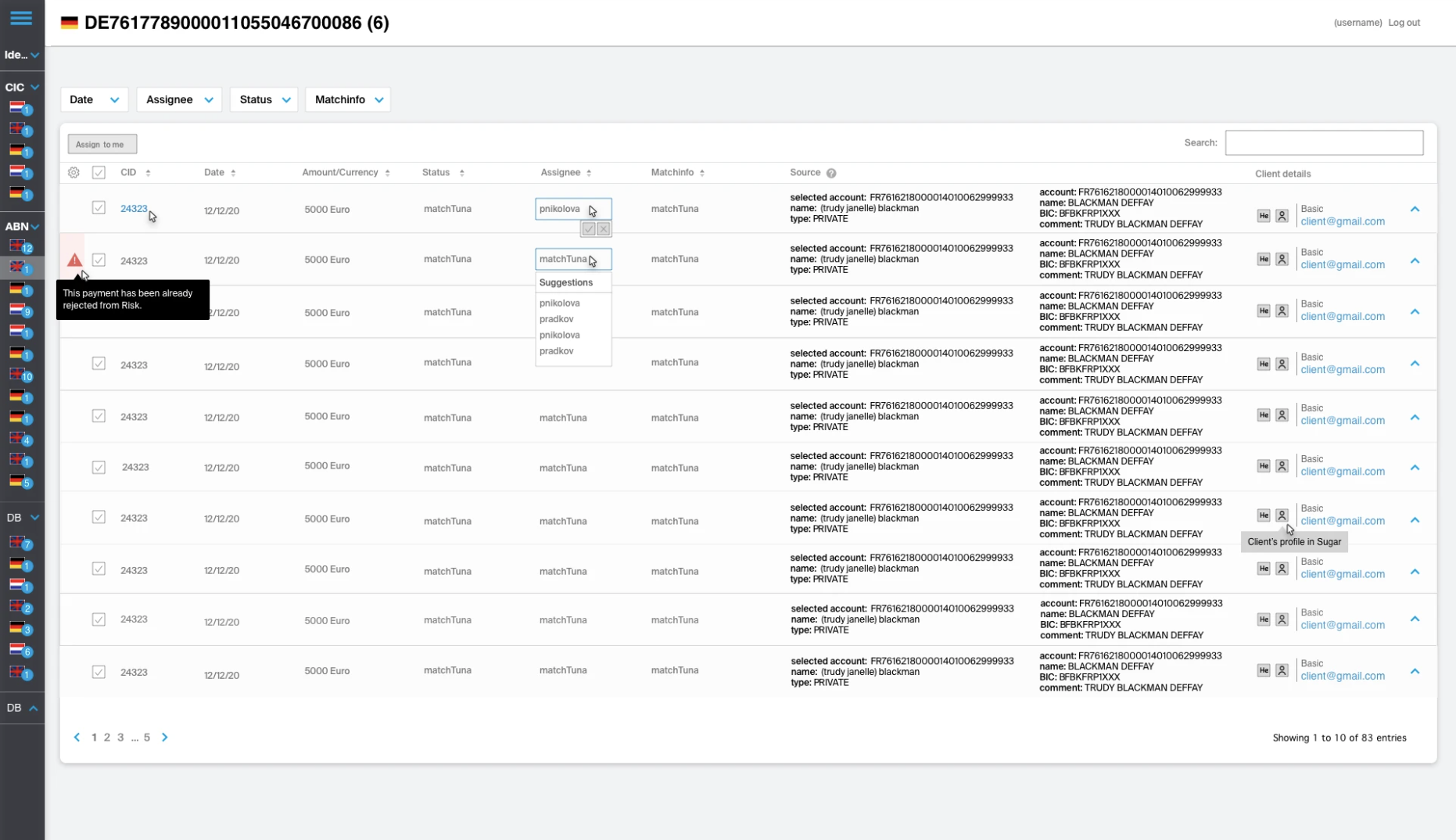
Payments remain scannable at volume, while filters, assignment, status, matching information, source data, and client details are organised around daily review work.
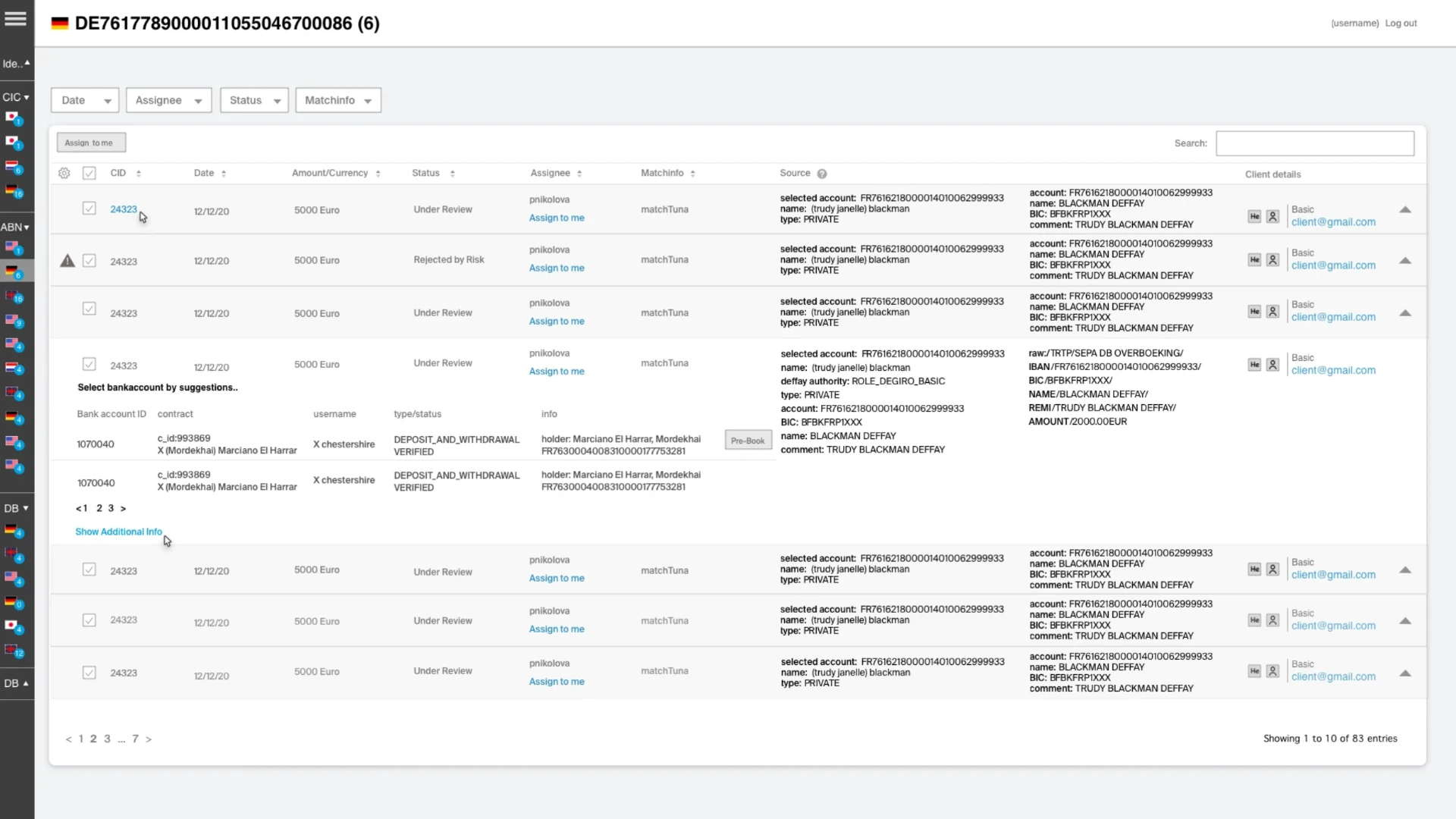
Expandable payment rows expose suggested bank-account matches and additional information directly where the user evaluates the transaction.
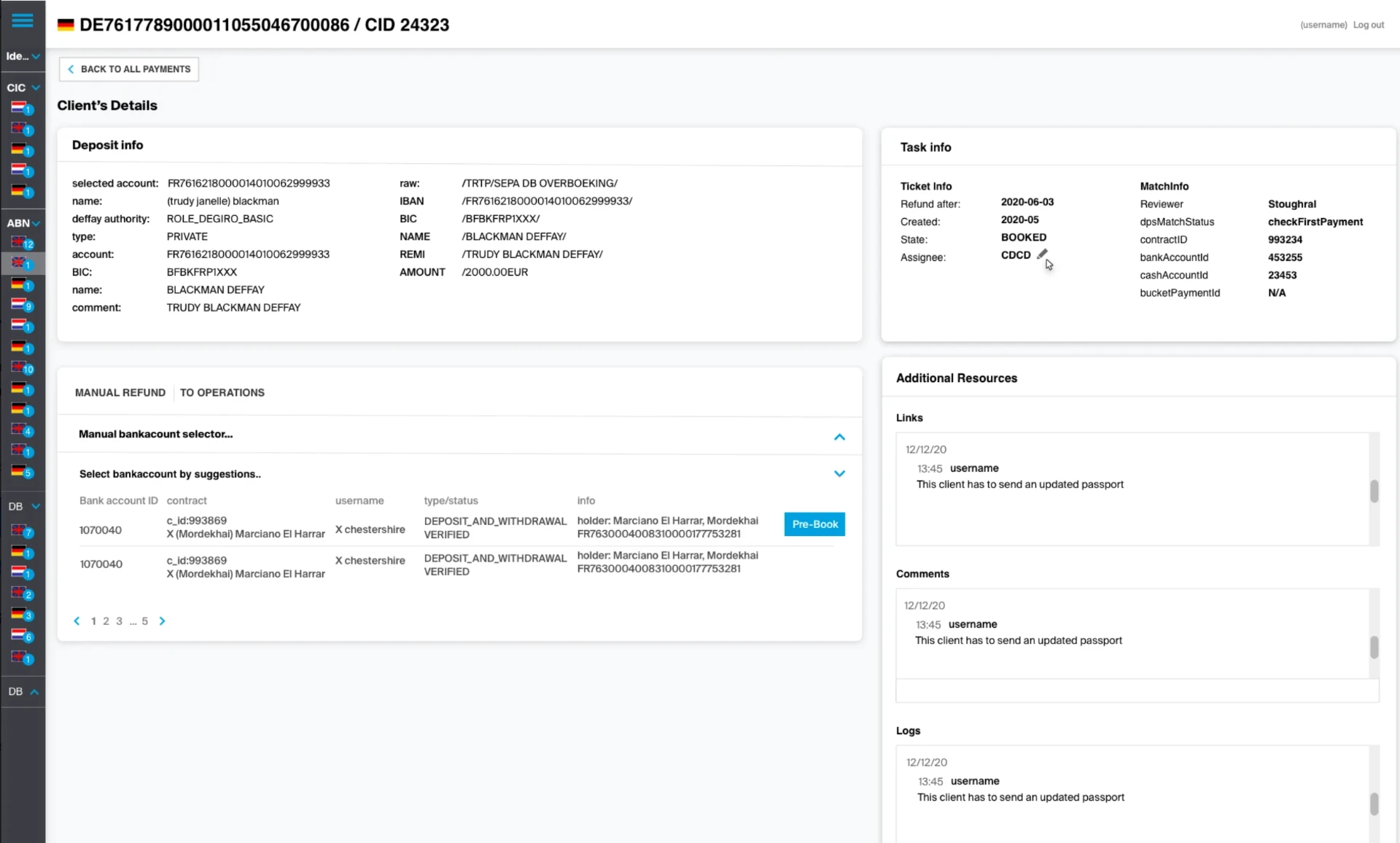
The payment detail view groups deposit data, task state, matching evidence, comments, and logs so authorised users can review and route the case with confidence.
Role & ownership
End-to-end product leadership — from discovery and strategy through workflow definition and delivery support.
Business outcomes
The project turned a fragmented legacy experience into a clear, evidence-based direction for a more productive, controlled, and scalable internal money-processing system.
Lessons & principles
When several departments share a workflow, interface quality depends on how clearly responsibility and authority are represented.
Role access is not a technical afterthought. It determines what users can understand, decide, and safely complete.
Observed work reveals the dependencies and workarounds that a screen-by-screen redesign would otherwise preserve.
A strong concept improves the highest-risk decisions first while respecting the technical reality of the current platform.
The highest-value improvements often sit between teams, permissions, business rules, and technical constraints — not inside a single screen.
We help organisations audit complex workflows and turn operational evidence into a clear, feasible product direction.
No long-term commitments. No generic frameworks. Just clear direction.